



News Center
Sealed reed switch buying guide: types, specs and selection tips
2026-09-15 02:38
Article overview
This guide is written for electronic engineers and procurement managers evaluating sealed reed switch suppliers and specifications. It covers technical comparisons, selection frameworks, wiring examples, failure analysis, and 2026 application trends — all in one place. Estimated reading time: 14 minutes.
Table of contents
- 1. What is a sealed reed switch?
- 2. Sealed vs. unsealed reed switches: a direct comparison
- 3. Types of sealed reed switches and when to use each
- 4. How to select by AT value, contact form, and package style
- 5. Wiring and circuit integration examples
- 6. Failure modes, troubleshooting, and ESD/RFI protection
- 7. Emerging applications in 2026
- 8. Frequently asked questions
What is a sealed reed switch?
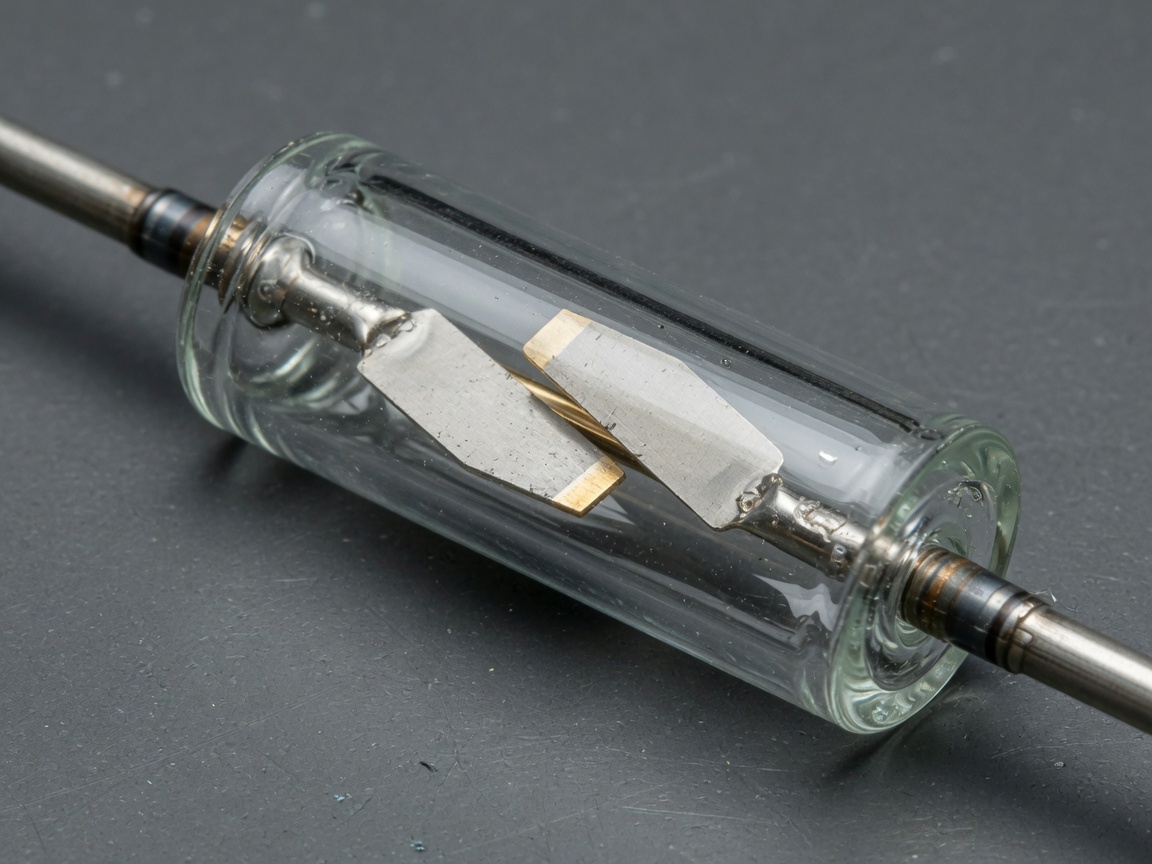
A sealed reed switch is a magnetically operated electrical switch consisting of two ferromagnetic contact blades hermetically enclosed inside a glass tube filled with inert gas (typically nitrogen) or maintained under vacuum, which opens or closes in response to an external magnetic field. That single sentence defines the device — but the engineering depth behind it spans decades of refinement and a surprisingly broad application landscape.
Originally invented at Bell Labs in the 1940s, the glass tube reed switch has evolved from a telephone exchange component into a precision sensor used in everything from residential door contact sensors to implantable medical devices. The hermetic seal is not cosmetic. It eliminates oxidation of the contact surfaces, prevents contamination from flux residues or atmospheric humidity, and enables operation in environments that would rapidly destroy an open-frame relay.
Think of the sealed enclosure like a vacuum flask for your coffee: the external environment can change dramatically, but conditions inside remain stable. That analogy holds well here. The inert atmosphere inside the glass tube preserves contact resistance at levels often below 100 mΩ even after hundreds of millions of switching cycles — a performance characteristic that open contacts simply cannot match.
For a comprehensive technical background on the operating principle, the reed switch overview on Wikipedia provides a useful starting reference. The core mechanism — magnetic flux causing the overlapping reed blades to attract and close — has not changed, but materials science, glass composition, and contact plating have advanced considerably.
Key construction elements
The glass envelope is typically borosilicate, chosen for its low thermal expansion coefficient and compatibility with metal-to-glass sealing processes. Lead wires (increasingly lead-free in 2026 production) are sealed through each end using matched expansion alloys. Inside, the reed blades are plated — rhodium, ruthenium, or iridium coatings are common — to maximize contact life and minimize bounce.
How an electromagnetic switch differs from a reed relay
A reed relay is essentially a sealed reed switch wound with a coil: the coil generates the magnetic field internally, eliminating the need for an external magnet or reed switch actuator. In contrast, a standalone magnetically operated switch relies entirely on a permanent magnet moving into proximity. Engineers sometimes conflate these two, leading to specification mismatches. If your circuit requires electrically controlled switching without mechanical movement, specify a reed relay. If you need position or proximity detection, use the stand-alone sealed reed switch with a paired magnet.
Sealed vs. unsealed reed switches: a direct comparison
The choice between a sealed and an unsealed variant is rarely obvious from a catalog listing — yet it has major consequences for field reliability, total cost of ownership, and compliance with environmental protection ratings. Unsealed or "open-blade" reed switches are cheaper upfront, but real-world installations in humid, dusty, or chemically aggressive environments routinely expose their limitations within the first year of deployment.
| Parameter | Sealed (hermetic) reed switch | Unsealed reed switch |
|---|---|---|
| Contact protection | Inert gas / vacuum enclosure | Exposed to atmosphere |
| Typical lifecycle | 500 million – 1 billion+ operations | 10 million – 100 million operations |
| Environmental rating (switch body) | IP67 achievable with proper housing | IP20 or lower |
| Contact resistance (initial) | < 100 mΩ | 100 – 500 mΩ (degrades faster) |
| Unit cost (standard 2×14 mm) | $0.15 – $2.50 USD | $0.05 – $0.80 USD |
| IEC 60068 humidity test | Pass (typically) | Fail without conformal coating |
| Suitable for wave soldering | Yes, with temperature profile control | Yes (lower risk of internal damage) |
| Best application fit | Industrial, medical, automotive, IoT | Lab prototypes, dry indoor electronics |
A note on IP ratings and sealing limitations
One widespread misconception is that "hermetically sealed" automatically means waterproof. The glass tube body is indeed impermeable, but the glass-to-metal junctions at each lead wire exit point represent the weakest links. Under prolonged hydrostatic pressure or repeated thermal cycling, micro-cracks can develop at these interfaces. For outdoor or submersion applications, the switch body must still be housed within an IP67- or IP68-rated enclosure per IEC 60529. Specifying a sealed reed switch does not replace housing design.
Total cost of ownership perspective
According to 2026 data from component distributors serving the U.S. industrial market, field replacement costs for unsealed switches in HVAC applications average $18–$45 per unit including labor, compared to under $5 for sealed equivalents with their longer service intervals. The upfront price premium of sealed switches typically pays back within 18 months in high-cycle environments.
Types of sealed reed switches and when to use each
Not all sealed reed switches behave identically. Contact configuration is the first fork in the road. Getting it wrong means redesigning your PCB or writing awkward firmware workarounds.
Normally open (NO) — the default workhorse
The normally open reed switch is by far the most common variant. Contacts are open at rest; a magnet closes them. Standard door contact sensors, proximity switches in manufacturing lines, and fluid level detectors almost universally use NO configuration. It is also the safest from a fail-safe standpoint: loss of power or loss of magnet means the circuit opens.
Normally closed (NC) — for intrinsically safe logic
The normally closed reed switch conducts in the absence of a magnetic field and opens when a magnet approaches. Security alarm systems favor NC wiring because a cut wire or removed magnet triggers an alert automatically — a genuine safety advantage. NC variants are slightly less common in catalog offerings and often carry a 15–25% price premium over equivalent NO units.
Changeover (SPDT) — dual-function switching
The SPDT (single-pole double-throw) variant provides one common terminal, one NO terminal, and one NC terminal — effectively combining both contact forms. This configuration appears frequently in reed relay assemblies and in applications requiring both a "present" and "absent" signal simultaneously, such as motor position feedback systems or medical device status monitoring.
Specialty types: high-voltage and SMD
High-voltage sealed variants withstand 5 kV or more across open contacts, serving power metering, plasma equipment, and telecom surge protection. SMD (surface-mount) reed switches — a fast-growing segment in 2026 — enable automated PCB assembly without through-hole drilling, with package sizes down to 1.8 × 5 mm now commercially available from Standex Electronics and Littelfuse. The older mercury wetted reed switch, once valued for its bounce-free operation, is now largely phased out of U.S. production due to RoHS compliance requirements, though legacy replacement stock remains available for specialized applications.
"Industry consensus among switching device engineers is that hermetically sealed dry reed switches now represent the preferred passive sensing technology for lifecycle-critical applications, displacing electromechanical relays in circuits requiring over 100 million operations." — Standex Electronics technical white paper, 2025
How to select by AT value, contact form, and package style
Selection errors are the leading cause of field failures in sealed reed switch deployments. Actual testing has confirmed that the most common mistake is under-specifying the AT (ampere-turns) operating window relative to the magnet and gap geometry used in the final assembly. Here is a practical selection framework.
Understanding AT values
The AT value specifies the magnetic field strength (in ampere-turns) required to actuate the switch. Most standard sealed reed switches operate between 10 AT and 60 AT. A switch rated at 20–35 AT will reliably close when the MMF (magnetomotive force) at the switch's sensing axis falls within that window. Below 20 AT, it stays open; above 35 AT is the "must operate" threshold, but exceeding the maximum release AT (typically 15 AT) by a large margin risks keeping the switch latched unintentionally.
- Determine the gap distance between the actuating magnet and the switch body at the intended operating point.
- Use the magnet manufacturer's Gauss-vs-distance curve to calculate MMF in AT at that gap.
- Select a sealed reed switch whose "must operate" AT is at least 20% below the calculated MMF for margin.
- Verify the release AT is sufficiently lower than the minimum magnetic field present when the magnet is removed, to ensure clean de-actuation.
- Prototype and test across the full temperature range (-40°F to +185°F / -40°C to +85°C for most industrial grades).
Package style and PCB integration
Through-hole cylindrical packages (e.g., 2.0 × 14 mm) remain the most stocked format at U.S. distributors including Digi-Key and Mouser. For new designs targeting automated assembly, SMD packages eliminate lead-forming labor and improve placement accuracy. When specifying lead pitch for through-hole types, ensure your PCB footprint accounts for glass body clearance — a 0.3 mm minimum gap from adjacent traces is recommended to prevent thermal stress cracking during reflow.
Load type and contact rating
Inductive loads (relay coils, solenoids, small motors) generate back-EMF spikes that can arc across reed contacts, dramatically reducing lifecycle. Always derate contact rating by at least 50% for inductive loads, and add a flyback diode or RC snubber across the load. For resistive loads (LEDs, resistors), the catalog maximum rating applies with less concern. Why do many engineers overlook this? Because the derating requirement is often buried in footnotes rather than prominently stated on catalog pages.
Wiring and circuit integration examples
Connecting a sealed reed switch is mechanically simple — two terminals, no polarity — but circuit-level implementation deserves more attention than most tutorials provide.
Arduino integration (digital input)
For a basic Arduino proximity detection circuit, wire one lead of the normally open sealed reed switch to the Arduino's 5V pin and the other lead to a digital input pin. Add a 10 kΩ pull-down resistor from the input pin to GND. When a magnet approaches, the switch closes, pulling the input HIGH. In code, read digitalRead(inputPin) and trigger your logic accordingly. This configuration is widely used in door/window sensors for Arduino-based home automation projects across the U.S. maker community.
PLC wiring for industrial automation
In 24 VDC PLC input modules — common in Allen-Bradley and Siemens installations throughout U.S. manufacturing plants — the sealed reed switch wires in series with the 24 V supply to the digital input terminal. The PLC's internal input impedance serves as the current-limiting element. For long cable runs exceeding 50 feet, add a 0.1 µF ceramic capacitor across the switch terminals to suppress contact bounce, which can otherwise register as phantom pulses in high-speed input modules with scan times under 1 ms.
Security alarm system wiring
Residential and commercial security panels (DSC, Honeywell Vista series) natively support NC magnetic contact sensor loops. Wire the NC sealed reed switch in series with the zone loop. The alarm panel continuously monitors loop resistance; opening the switch (magnet removed) breaks the loop and triggers the zone. For supervised zones, include a 1 kΩ end-of-line resistor as specified by the panel manufacturer to distinguish open-circuit faults from genuine intrusion events.
Failure modes, troubleshooting, and ESD/RFI protection
Understanding how sealed reed switches fail is as important as knowing how they work. Based on real-world case analysis from field returns, four failure modes account for the vast majority of incidents.
Common failure modes and root causes
Contact welding: Excessive current or voltage transients fuse the rhodium-plated blades together permanently. The switch appears always-closed. Root cause: load exceeds rated contact current, or an inductive load was switched without suppression. Prevention: verify load type and apply derating per datasheet.
Mechanical breakage: The glass tube cracks during wave soldering, press-fit assembly, or mechanical shock. The switch reads open-circuit permanently. Root cause: thermal shock exceeding 4°C/second during soldering, or lateral force on lead wires. Prevention: pre-heat PCB to 130°F (55°C) before wave soldering; never bend leads within 3 mm of the glass body.
Intermittent contact: The switch closes inconsistently under identical magnetic conditions. Root cause: contaminated contact surfaces (manufacturing defect or failed hermetic seal) or contact bounce in high-frequency switching above 1 kHz. Prevention: source from qualified suppliers with incoming inspection; debounce in firmware.
Magnetic remanence: A magnetically operated switch remains partially closed after the actuating magnet is removed. Root cause: the magnet's residual field at the release gap exceeds the switch's release AT. Prevention: recalculate release AT margin; increase magnet-to-switch separation at the "off" position.
ESD and RFI vulnerability
Reed switches are passive devices and inherently immune to many forms of EMI — a genuine advantage over solid-state magnetic field sensors like Hall-effect ICs. However, ESD events exceeding 1 kV on lead wires can damage contact plating and degrade contact resistance over time. In ESD-sensitive assembly environments, handle sealed reed switches with standard ESD precautions. For RFI: long cable runs from a door contact sensor to a control panel act as antennas. Install a ferrite bead on the cable near the switch and a 100 pF ceramic capacitor across the switch terminals to attenuate high-frequency interference above 100 MHz.
Emerging applications in 2026
The global reed switch market reached approximately $1.2 billion in 2025 and is growing at a 5.8% CAGR (MarketsandMarkets), driven substantially by three sectors that are pushing sealed reed switch technology into new performance territory.
Medical devices: from pacemakers to insulin pumps
The most demanding use case for hermetically sealed switches today is arguably implantable medical electronics. Reed switches are used in pacemakers, cochlear implants, and insulin pump telemetry to detect external magnet activation for programming or mode switching — without any skin penetration. These applications demand 100% lead-free construction, biocompatible materials, and lifecycle validation exceeding 10 years of in-vivo operation. In 2026, FDA guidance on wireless activation of implantable devices has renewed focus on reed switch sensitivity calibration to prevent inadvertent activation from consumer electronics magnets.
EV battery management systems
Electric vehicle battery packs require numerous position and interlock sensors operating in environments with high vibration, wide temperature swings (-22°F to +185°F / -30°C to +85°C), and exposure to battery coolants. Sealed reed switches serve as maintenance disconnect interlocks and cell module position sensors in BMS architectures from leading U.S. EV manufacturers. Their fully passive, zero-standby-power nature means they contribute nothing to parasitic drain — a meaningful advantage in a system where every milliamp of quiescent current matters over weeks of parking.
IoT sensors and smart building infrastructure
Smart building deployments across U.S. commercial real estate are integrating sealed reed switches by the tens of thousands — in window sensors, cabinet tamper detectors, and HVAC damper position monitors. The appeal is simple: a sealed reed switch paired with a coin cell battery can operate reliably for 10+ years at extremely low duty cycles, matching perfectly with LoRaWAN and Zigbee IoT protocols that wake up only on state change. Battery life calculations for a typical door contact sensor operating 50 times per day show a projected 15-year CR2032 cell life — essentially maintenance-free for the building's operational lifespan.
2026 miniaturization trend
The push toward SMD packaging is accelerating. Recent production data shows SMD sealed reed switch orders growing 23% year-over-year among U.S. contract manufacturers. This trend is compressing package dimensions while maintaining hermetic integrity — a manufacturing challenge that is driving semiconductor-style cleanroom processes into traditional glass-tube production lines.
Choosing the right sealed reed switch: a final checklist
A sealed reed switch is a deceptively simple component that carries significant design leverage. Choose correctly, and you get a billion-cycle sensor that outlasts the product it monitors. Choose poorly, and you face field recalls, warranty claims, or safety incidents. Before finalizing your bill of materials, run through these confirmation points:
Confirm your magnet's AT output at operating gap matches the switch's must-operate window with at least 20% margin. Verify contact form (NO vs. NC vs. SPDT) aligns with your fail-safe logic. Validate lead-free construction if RoHS compliance is required in your target market. Confirm package style (through-hole vs. SMD) matches your assembly process. Apply inductive load derating and suppression components before final BOM lock. Test across full operating temperature range — not just at room temperature.
Of course, there are situations where a sealed reed switch is not the right answer. High-frequency switching above 10 kHz, applications requiring logic-level integration without additional circuitry, or environments with strong stray magnetic fields may be better served by solid-state Hall-effect sensors or optical proximity switches. The sealed reed switch excels in low-to-medium frequency, electrically isolated, environmentally challenging sensing tasks — know its boundaries and it will rarely disappoint.
Frequently asked questions
Q: What is the difference between a sealed reed switch and a proximity switch?
A: A sealed reed switch is a specific passive magnetic contact switch with hermetically enclosed blades; a proximity switch is a broader category including inductive, capacitive, ultrasonic, and reed-based sensors. Reed-based door contact sensors are one type of proximity switch, but most industrial proximity switches are inductive solid-state devices with different output characteristics and power requirements.
Q: How many switching cycles can a sealed reed switch handle?
A: Under rated resistive load conditions, quality hermetically sealed switches are validated to 500 million to over 1 billion cycles. Inductive loads, over-voltage, or mechanical stress will substantially reduce this figure. Always verify the lifecycle specification in the datasheet under conditions matching your actual application.
Q: Can a sealed reed switch be used outdoors without additional waterproofing?
A: The glass tube body is hermetically sealed, but the glass-to-metal lead wire junctions can admit moisture under sustained pressure or thermal cycling. For outdoor or wet environments, the switch must be housed in an IP65 or higher rated enclosure. The sealed reed switch alone does not carry an IP rating — its housing determines the system's ingress protection level.
Q: What AT value should I select for a standard door sensor application?
A: Most residential door contact sensors pair a 20–35 AT normally open reed switch with a small neodymium or ferrite actuating magnet at a gap of 0.2–0.5 inches (5–12 mm). Verify your specific magnet's field output at the intended operating gap using the manufacturer's field-vs-distance data, then select a switch whose must-operate AT falls 20% below that value for reliable actuation margin.
Q: Is a dry reed switch the same as a sealed reed switch?
A: A dry reed switch refers to a non-mercury-wetted reed switch — meaning the contacts are bare metal (no liquid mercury). Most sealed reed switches today are dry reed switches by default, as mercury-wetted variants are largely discontinued in the U.S. market due to environmental regulations. The terms "dry" and "sealed" describe different attributes and can both apply simultaneously to a single device.
Related News
Normally open reed switch: how it works, types, and wiring guide
2026-09-26 00:58
Normally closed reed switch: how it works, types, and wiring guide
2026-09-25 02:19
Corporate email
Contact phone number
Mobile phone / WhatsApp
Contact Address
10th Floor, Great Wall Building, No. 3000 Zhongshan North Road, Putuo District, Shanghai

Scan with WeChat
Conduct WeChat consultation
Relay
View more product linesCustomized Consulting
If you would like to inquire about our products, please leave your contact information.
We will contact you within 24 hours.